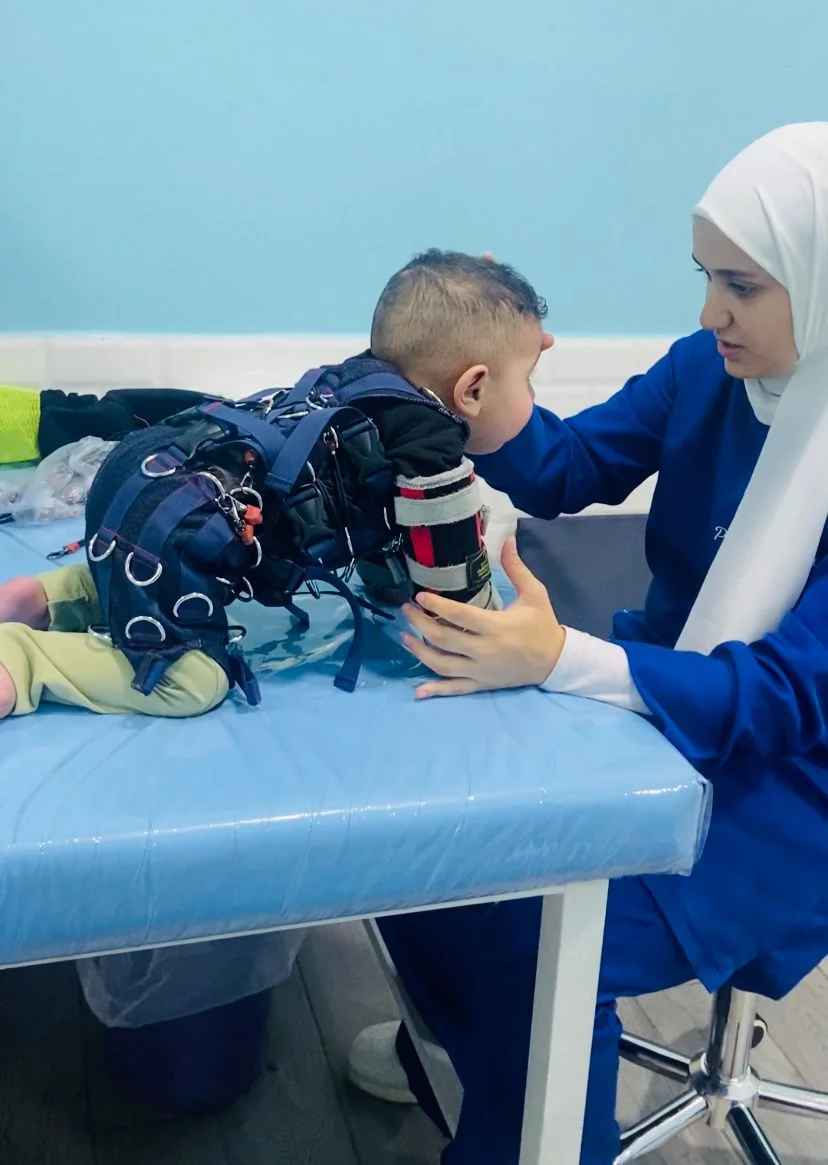
TheraSuit Therapy: A Modern Approach to Pediatric Neurorehabilitation
TheraSuit Therapy is one of the most advanced methods in pediatric physical and neurorehabilitation, designed to help children with motor disorders resulting from cerebral palsy, brain injuries, or delayed motor development.
Originally inspired by space suits used by astronauts to maintain muscle strength in zero gravity, the TheraSuit was adapted for therapeutic use in children. It aims to enhance motor control, strengthen muscles, and support functional movement patterns.
How the TheraSuit Works
The TheraSuit consists of a vest, shorts, knee pads, and specially designed elastic cords that provide adjustable resistance to the body.
This controlled resistance helps to:
Stimulate proprioceptive feedback, improving the child’s awareness of body position and movement.
Enhance balance and coordination through proper body alignment.
Strengthen weak muscles and reduce spasticity by activating deep stabilizing muscles.
Retrain the central nervous system (CNS) to perform more functional and efficient movement patterns.
Research-Based Benefits
Scientific studies have shown that combining TheraSuit Therapy with intensive physical rehabilitation leads to significant improvements in gross motor performance and daily functional skills in children with cerebral palsy (CP) or acquired brain injuries.
Bar-Haim et al. (2006) found that children receiving intensive TheraSuit therapy for four weeks showed marked improvements in trunk control and balance compared to standard therapy.
Bailes et al. (2011) reported that the TheraSuit method can be safely and effectively integrated into pediatric rehabilitation when administered by trained professionals.
Khng & Ng (2020) concluded that TheraSuit therapy enhances balance, muscle strength, and gait patterns in children with spastic cerebral palsy.
Who Can Benefit from TheraSuit Therapy
TheraSuit therapy is recommended for children with:
Cerebral palsy (CP)
Acquired or congenital brain injuries
Balance or coordination difficulties
Global motor delay
Neuromuscular or movement-related syndromes
Safety and Professional Supervision
TheraSuit therapy should always be conducted under the supervision of a certified physical therapist trained in the TheraSuit protocol.
Proper assessment is essential before starting the program, particularly for children with joint issues or bone fragility, to ensure a safe and effective treatment plan.
Conclusion
TheraSuit Therapy represents a major advancement in pediatric neurorehabilitation.
It goes beyond simple muscle strengthening — retraining the central nervous system to move in a more balanced, functional way.
When combined with traditional physical therapy, it provides children with real opportunities for improved motor development, independence, and a better quality of life.
References
Bailes, A. F., Greve, K., Schmitt, L. C., & Nelson, C. A. (2011). Changes in motor function and strength in children with cerebral palsy following intensive suit therapy: A pilot study. Pediatric Physical Therapy, 23(2), 200–207.
Bar-Haim, S., Harries, N., Belokopytov, M., Frank, A., Copeliovitch, L., Kaplanski, J., & Lahat, E. (2006). Comparison of efficacy of Adeli suit and neurodevelopmental treatments in children with cerebral palsy. Developmental Medicine & Child Neurology, 48(5), 325–330.
Khng, G., & Ng, S. S. (2020). The effectiveness of TheraSuit method on gross motor function and balance in children with spastic cerebral palsy: A systematic review. Hong Kong Physiotherapy Journal, 40(1), 47–58.