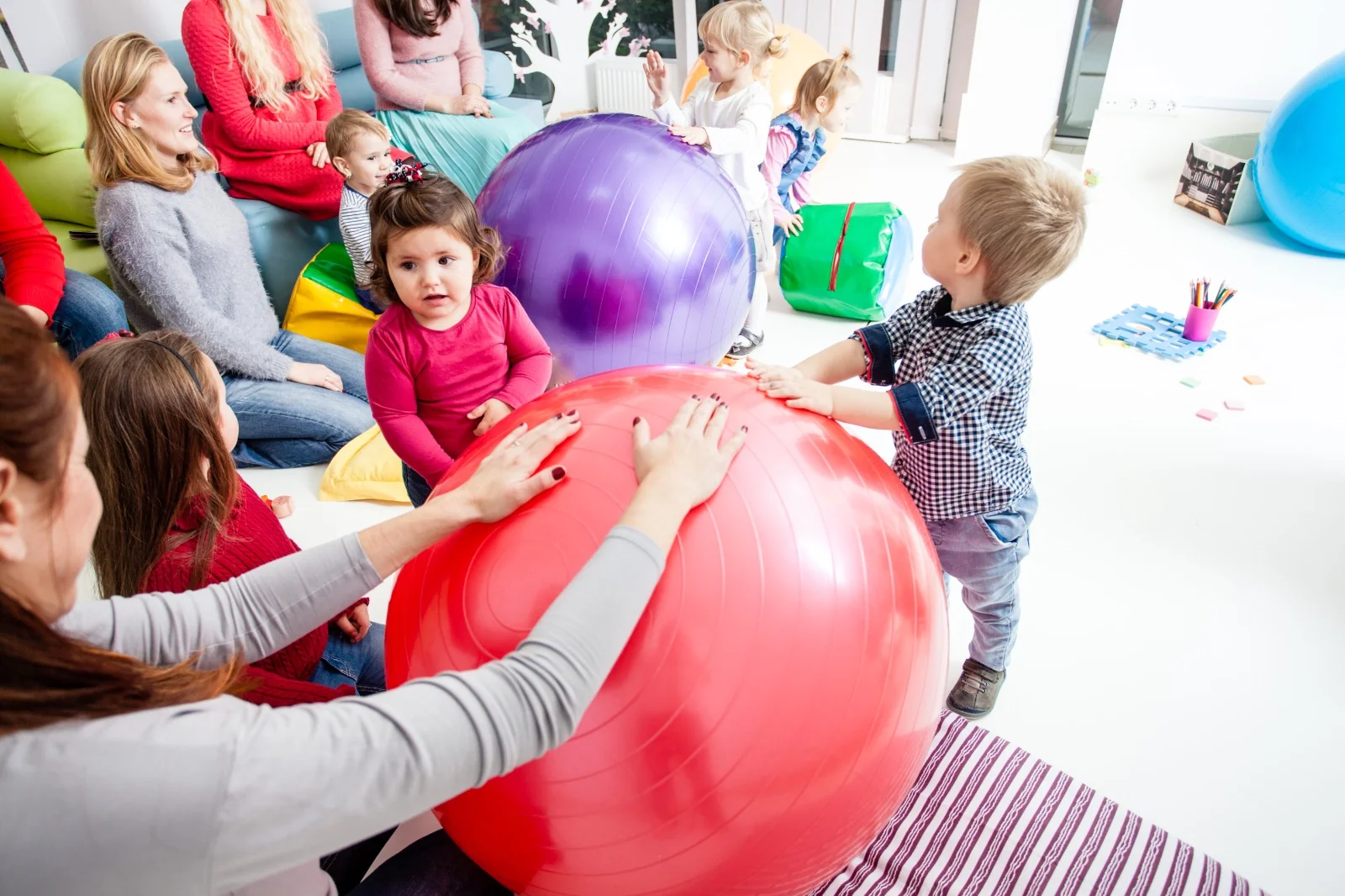
Group Occupational Therapy for Children: Enhancing Social and Functional Skills
At The One for Physical Therapy, we offer group occupational therapy (OT) sessions for children with similar abilities and challenges. Group therapy provides a structured, interactive environment where children can develop social, communication, and functional skills while practicing motor, sensory, and cognitive tasks.
Why Group OT Sessions?
Children with developmental or neurological challenges often face social participation difficulties in addition to motor or sensory impairments. Group OT offers multiple benefits:
Peer interaction: Children learn social norms, turn-taking, and collaborative play.
Motivation and engagement: Seeing peers succeed encourages participation and effort.
Reinforced learning: Practicing skills in a social context promotes generalization to real-world situations.
Cost-effective delivery: Group sessions allow multiple children to benefit from professional guidance simultaneously.
Evidence Supporting Group OT
Research indicates that group OT is effective in improving both social and functional outcomes:
Enhanced social participation and communication
A study by Coster et al. (2007) found that children with developmental coordination disorder (DCD) demonstrated improved peer interaction and communication skills after participating in structured group OT sessions.
Improved functional and motor skills
Group therapy provides opportunities for task-oriented practice in a motivating social environment. Studies show that children with cerebral palsy or developmental delays can improve fine motor control, self-care skills, and sensory processing in a group setting (Case-Smith & Arbesman, 2008).
Behavioral and emotional benefits
Participation in group OT has been linked to increased confidence, self-regulation, and adaptive coping strategies, which enhance overall participation at home and school (King et al., 2009).
How We Implement Group OT at Our Center
Grouping based on abilities and challenges: Children are carefully selected for similar functional levels to ensure effective peer modeling and achievable tasks.
Structured activities: Sessions include games, role-playing, cooperative tasks, and sensory-motor exercises designed to promote social interaction while addressing motor and functional goals.
Evidence-based practice: Interventions are based on established OT frameworks such as Sensory Integration, Developmental, and Task-Oriented Approaches.
Outcome tracking: Progress is measured through standardized tools such as the Pediatric Evaluation of Disability Inventory (PEDI), Goal Attainment Scaling (GAS), and observational social skills assessments.
Parent involvement: Families receive guidance on reinforcing skills at home and promoting peer interaction in natural settings.
Benefits of Group OT
Encourages socialization and teamwork
Strengthens functional and motor skills in meaningful contexts
Promotes motivation and engagement through peer modeling
Builds confidence, self-regulation, and participation in daily life
Conclusion
Group occupational therapy is a powerful, evidence-informed approach that combines motor, sensory, and functional skill training with peer interaction and social learning. At The One for Physical Therapy, our group OT sessions provide a safe, structured, and engaging environment where children develop essential life skills while enhancing their social and functional abilities.
References
Case-Smith, J., & Arbesman, M. (2008). Evidence-based review of interventions for children with autism spectrum disorders. American Journal of Occupational Therapy, 62(4), 416–429.
Coster, W., Law, M., Bedell, G., Liljenquist, K., Kao, Y., Khetani, M., & Teplicky, R. (2007). School participation, supports and barriers of students with and without disabilities. Child: Care, Health and Development, 33(4), 369–377.
King, G., Law, M., King, S., Rosenbaum, P., Kertoy, M., & Young, N. (2009). A conceptual model of the factors affecting the recreation and leisure participation of children with disabilities. Physical & Occupational Therapy in Pediatrics, 29(1), 59–77.