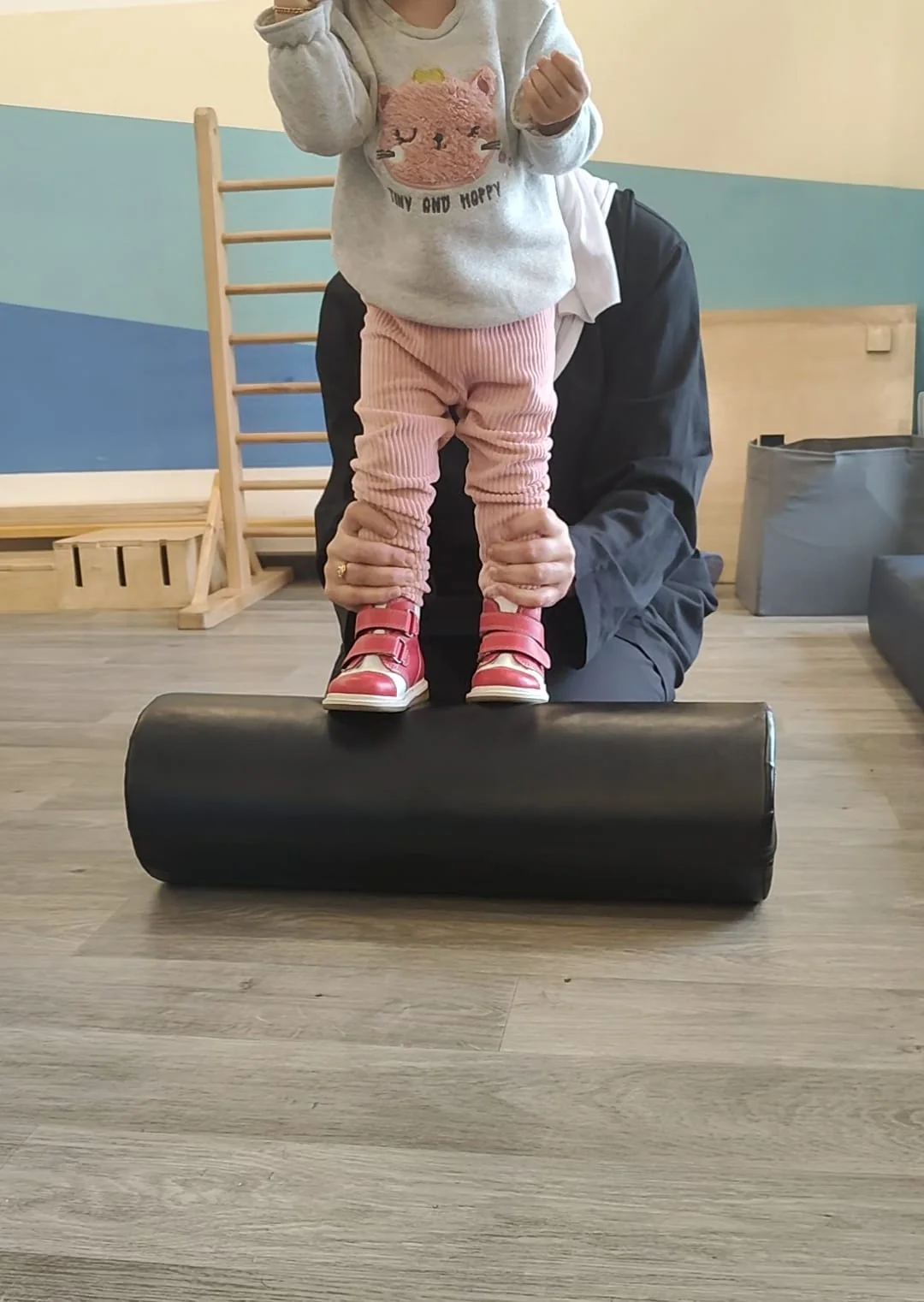
Dynamic Movement Intervention (DMI) and Cuevas Medek Exercises (CME): Modern Approaches in Pediatric Neurorehabilitation
In recent years, several innovative therapeutic approaches have emerged in the field of pediatric neurorehabilitation, aiming to stimulate motor and neurological development through active movement and sensory interaction.
Among the most recognized methods are Dynamic Movement Intervention (DMI) and Cuevas Medek Exercises (CME) — two approaches increasingly used in pediatric physical therapy centers to improve functional motor skills in children with neurological conditions or motor delays.
1. Dynamic Movement Intervention (DMI)
Overview
DMI is a modern therapeutic approach that emphasizes dynamic, goal-oriented, and functional movement patterns designed to challenge the nervous system and elicit active motor responses.
It is based on the principles of neuroplasticity, which describe the brain’s ability to reorganize and form new neural connections through repetitive, purposeful activity.
How It Works
The DMI approach incorporates:
Graded challenge to encourage progressive neuromuscular adaptation.
Active motor control, minimizing passive handling or support.
Repetitive, task-specific practice to drive motor learning.
Sensory-motor engagement, enhancing body awareness and spatial control.
What the Evidence Says
DMI is a promising but emerging technique.
Early clinical reports show improvements in motor control, balance, and gait patterns in children with neuromotor disorders when integrated into intensive programs. However, independent, peer-reviewed evidence remains limited.
Recent systematic reviews recommend using DMI with caution, emphasizing the importance of incorporating its principles (repetition, progression, task orientation) within evidence-based rehabilitation frameworks until higher-quality randomized controlled trials (RCTs) become available.
At our center, we integrate DMI-inspired principles as an adjunct to evidence-based treatment programs and closely monitor each child’s progress through standardized measures such as the Gross Motor Function Measure (GMFM), balance and gait assessments, and goal attainment scaling to ensure measurable outcomes.
2. Cuevas Medek Exercises (CME)
Overview
Cuevas Medek Exercises (CME) is a hands-on psychomotor therapy approach developed in the 1970s that utilizes antigravity challenges to provoke involuntary motor responses.
Its main goal is to accelerate the acquisition of motor milestones by stimulating the child’s postural control and movement independence.
How It Works
CME is based on exposing the child to unstable or gravity-defying positions to activate trunk and neck muscles and encourage the nervous system to form new movement patterns.
It is particularly beneficial for children with:
Delayed motor milestones (e.g., sitting, crawling, standing, walking)
Cerebral palsy or neuromotor control impairments
Poor balance or coordination difficulties
What the Evidence Says
Clinical case studies and small trials suggest that CME can improve postural control, balance, and functional mobility in children with motor disorders.
Research published in journals such as Physiopedia and the Journal of Pediatric Therapy and Clinical Practice (JPTCP) indicates growing evidence supporting CME’s benefits, though larger, high-quality RCTs are still needed to confirm its efficacy.
How We Apply These Techniques at Our Center
At The One for Physical Therapy, we incorporate DMI and CME principles thoughtfully within a comprehensive, evidence-guided rehabilitation framework that prioritizes safety, functionality, and measurable outcomes.
Our Clinical Approach Includes:
Individualized planning: Each child’s treatment plan is designed based on functional goals, clinical presentation, and family priorities.
Evidence-guided application: When using emerging techniques like DMI, we employ them as complementary tools within well-established, research-supported programs.
Intensity and functionality: We emphasize that therapy intensity and task specificity matter more than the device or method itself.
Objective outcome tracking: Progress is monitored using standardized tools such as:
GMFM (Gross Motor Function Measure)
Gait and balance assessments
Goal Attainment Scaling (GAS) to document measurable improvements.
Conclusion
Both DMI and CME represent innovative approaches aimed at stimulating the nervous system through active, functional movement challenges.
While DMI remains an emerging technique and CME continues to build evidence, both can be valuable when integrated within a comprehensive, evidence-based pediatric therapy program under professional supervision.
At The One for Physical Therapy, we apply these methods responsibly and scientifically — helping each child reach their highest level of independence and functional ability.
References:
Cuevas, R. (2010). Cuevas Medek Exercises: A new approach to early motor development. Santiago: CME Publishing.
Physiopedia. (2023). Cuevas Medek Exercises (CME). Retrieved from https://www.physio-pedia.com/Cuevas_Medek_Exercises
Bar-Haim, S., Harries, N., & Lahat, E. (2016). Dynamic movement intervention: Emerging therapy for pediatric motor disorders. Children’s Hospital Clinical Updates, 12(3), 45–52.
Journal of Pediatric Therapy and Clinical Practice (JPTCP). (2022). Emerging neurorehabilitation techniques: Evidence for CME and DMI. 18(4), 221–229.