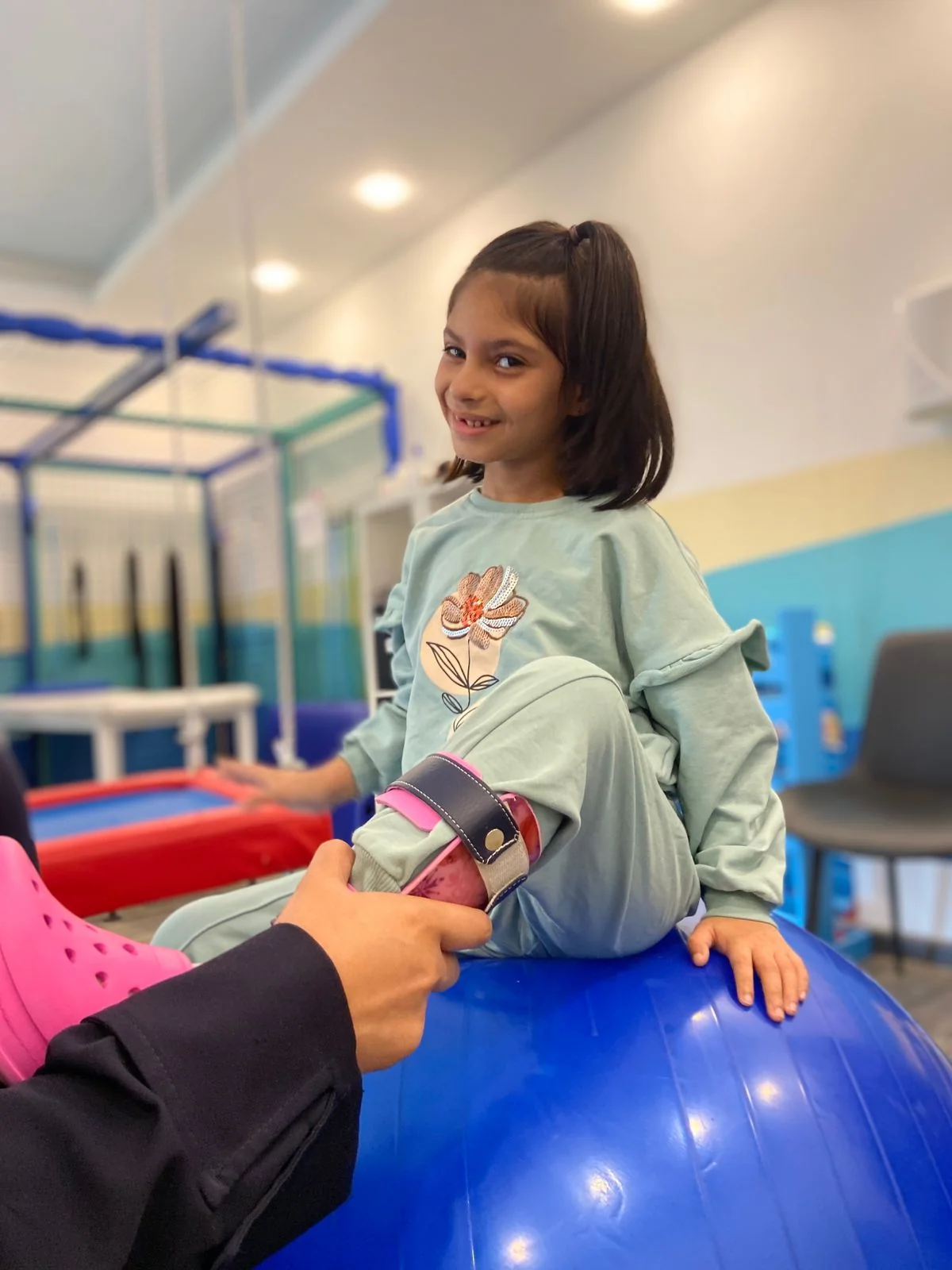
Neuro-Developmental Treatment (NDT) in Pediatric Physical Therapy: Enhancing Movement and Function
At The One for Physical Therapy, we incorporate Neuro-Developmental Treatment (NDT) as a core approach for children with neuromotor impairments, such as cerebral palsy, hypotonia, spina bifida, or developmental delays. NDT is a hands-on, individualized therapy method that focuses on facilitating normal movement patterns, improving postural control, and enhancing functional abilities.
What is NDT?
NDT is an evidence-based therapeutic approach that emphasizes:
Facilitating normal movement patterns: Using guided handling and positioning to promote efficient and functional movement.
Postural control and alignment: Enhancing trunk stability, balance, and symmetry to support everyday activities.
Task-specific practice: Integrating therapy into functional tasks such as sitting, standing, reaching, and walking.
Reducing compensatory movements: Helping children develop more efficient motor strategies and prevent maladaptive patterns.
Evidence for NDT Effectiveness
Research supports NDT as a key intervention in pediatric physical therapy, particularly for children with cerebral palsy and other neuromotor disorders:
Improved gross motor function
Studies show that NDT-based programs enhance trunk control, sitting balance, and mobility in children with spastic or hypotonic CP (Novak et al., 2013).
Postural alignment and stability
NDT improves postural symmetry and weight-bearing abilities, which are foundational for standing, walking, and functional independence (Kleim & Jones, 2008).
Functional participation
Children receiving NDT show better performance in self-care, play, and school-related activities due to improved movement efficiency and control (Chen et al., 2016).
Integration with other therapies
NDT is most effective when combined with task-oriented practice, strengthening exercises, and assistive devices, creating a comprehensive therapy program tailored to each child.
Why We Use NDT in Our Center
At The One for Physical Therapy, we adopt NDT because it:
Targets individualized needs: Therapy is customized to each child’s motor impairments, functional goals, and family priorities.
Facilitates functional independence: By improving posture, strength, and coordination, children can participate more fully in daily activities.
Prevents maladaptive patterns: Reduces risk of contractures, deformities, and inefficient movement.
Supports neuroplasticity: Encourages the nervous system to develop more efficient motor pathways, especially in early developmental stages.
Combines seamlessly with other approaches: NDT complements orthoses, UEU, CME, DMI, and task-specific interventions.
How We Deliver NDT
Individualized sessions: Frequency and duration are tailored based on age, severity, and goals.
Hands-on guidance: Therapists provide manual cues to facilitate normal movement and inhibit compensatory patterns.
Functional integration: Therapy focuses on real-life tasks, such as sitting, reaching, standing, and walking.
Outcome tracking: We measure progress using Gross Motor Function Measure (GMFM), Pediatric Balance Scale, and goal attainment scaling.
Conclusion
Neuro-Developmental Treatment (NDT) is a cornerstone of pediatric physical therapy for children with neuromotor challenges. At The One for Physical Therapy, we integrate NDT into evidence-based, individualized programs to maximize functional independence, improve movement quality, and enhance participation in daily life.
References
Novak, I., et al. (2013). A systematic review of interventions for children with cerebral palsy: state of the evidence. Developmental Medicine & Child Neurology, 55(10), 885–910.
Kleim, J. A., & Jones, T. A. (2008). Principles of experience-dependent neural plasticity: implications for rehabilitation after brain damage. Journal of Speech, Language, and Hearing Research, 51(1), S225–S239.
Chen, Y., et al. (2016). Effectiveness of neurodevelopmental treatment on postural control in children with cerebral palsy: A systematic review. Clinical Rehabilitation, 30(11), 1077–1086.