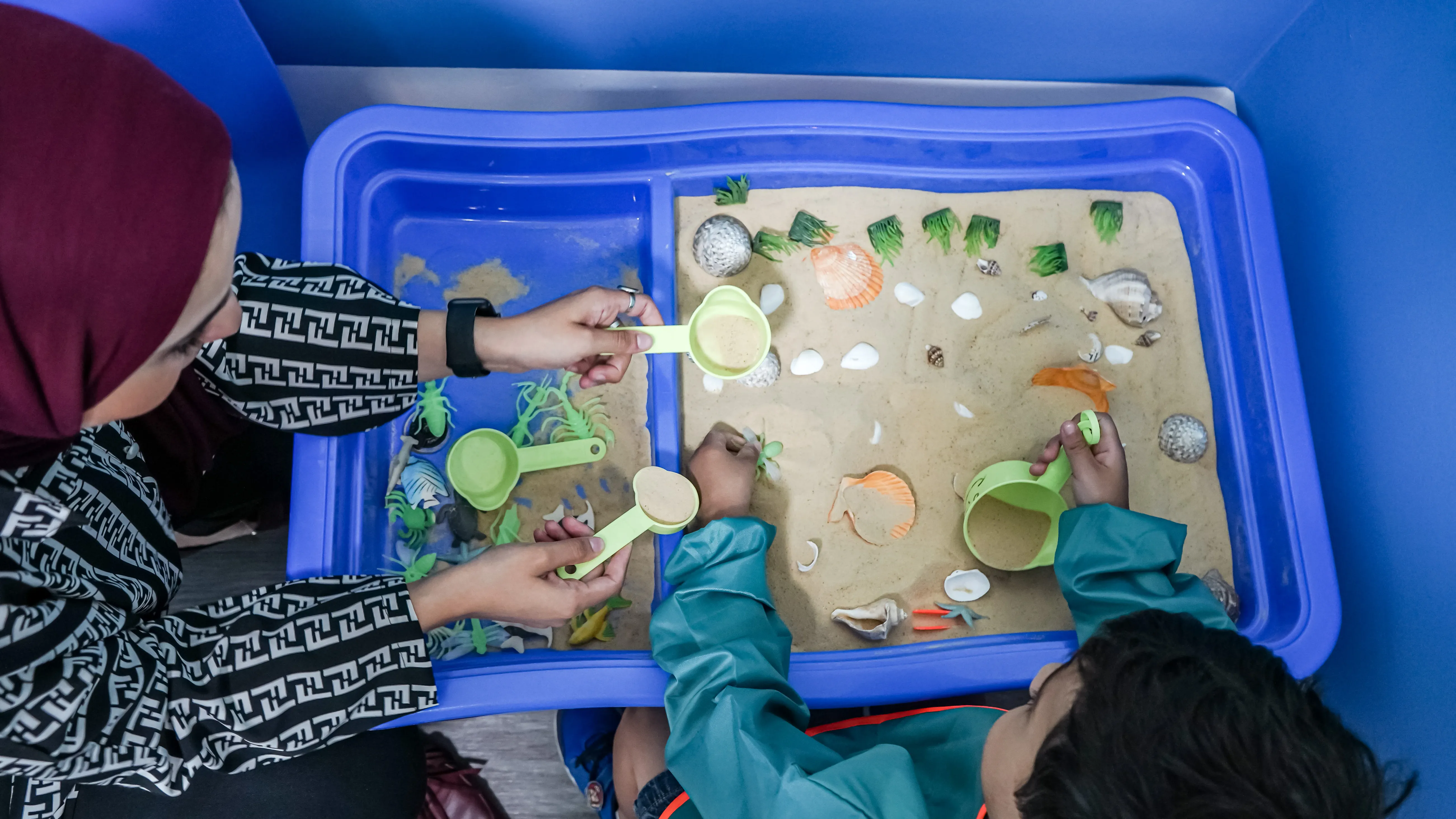
Sensory-Motor Integration: How Motor Activities Support Cognitive, Social, and Sensory Development
Sensory-motor integration is a crucial process linking movement with sensory, cognitive, and social skills in children. Well-structured motor activities not only develop strength and balance but also play a key role in enhancing attention, perception, and the ability to interact with the environment.
How Motor Activities Support Overall Development
Sensory Development: Movement helps children process different sensory inputs such as touch, balance, and proprioception.
Cognitive Development: Motor games requiring planning and sequencing enhance problem-solving and logical thinking.
Social Development: Group-based exercises promote communication, cooperation, and social play skills.
Motor Development: Activities improve balance, hand-eye coordination, muscle strength, and body control.
Examples of Sensory-Motor Activities
Walking on different surfaces to stimulate balance and sensory responses.
Jumping and climbing to strengthen muscles and stimulate proprioception.
Hand and finger exercises to develop fine motor skills and coordination.
Organized group play to reinforce social interaction and teamwork.
Evidence-Based Support
Research shows that motor interventions involving sensory stimulation significantly improve balance, motor coordination, and attention in children (Case-Smith et al., 2015).
Early sensory-motor programs support cognitive and social development, especially in children with motor or sensory delays.
Conclusion
Structured motor activities not only strengthen the body but also play a critical role in enhancing sensory processing, cognition, and social interaction. Incorporating these activities into pediatric therapy or educational programs ensures holistic and integrated development for the child.
References
Case-Smith, J., & O’Brien, J. C. (2015). Occupational therapy for children and adolescents. Elsevier Health Sciences.
Ayres, A. J. (2005). Sensory Integration and the Child: Understanding Hidden Sensory Challenges. Western Psychological Services.
Pfeiffer, B., Koenig, K., Kinnealey, M., Sheppard, M., & Henderson, L. (2011). Effectiveness of sensory integration interventions in children with autism spectrum disorders: A pilot study. American Journal of Occupational Therapy, 65(1), 76–85.