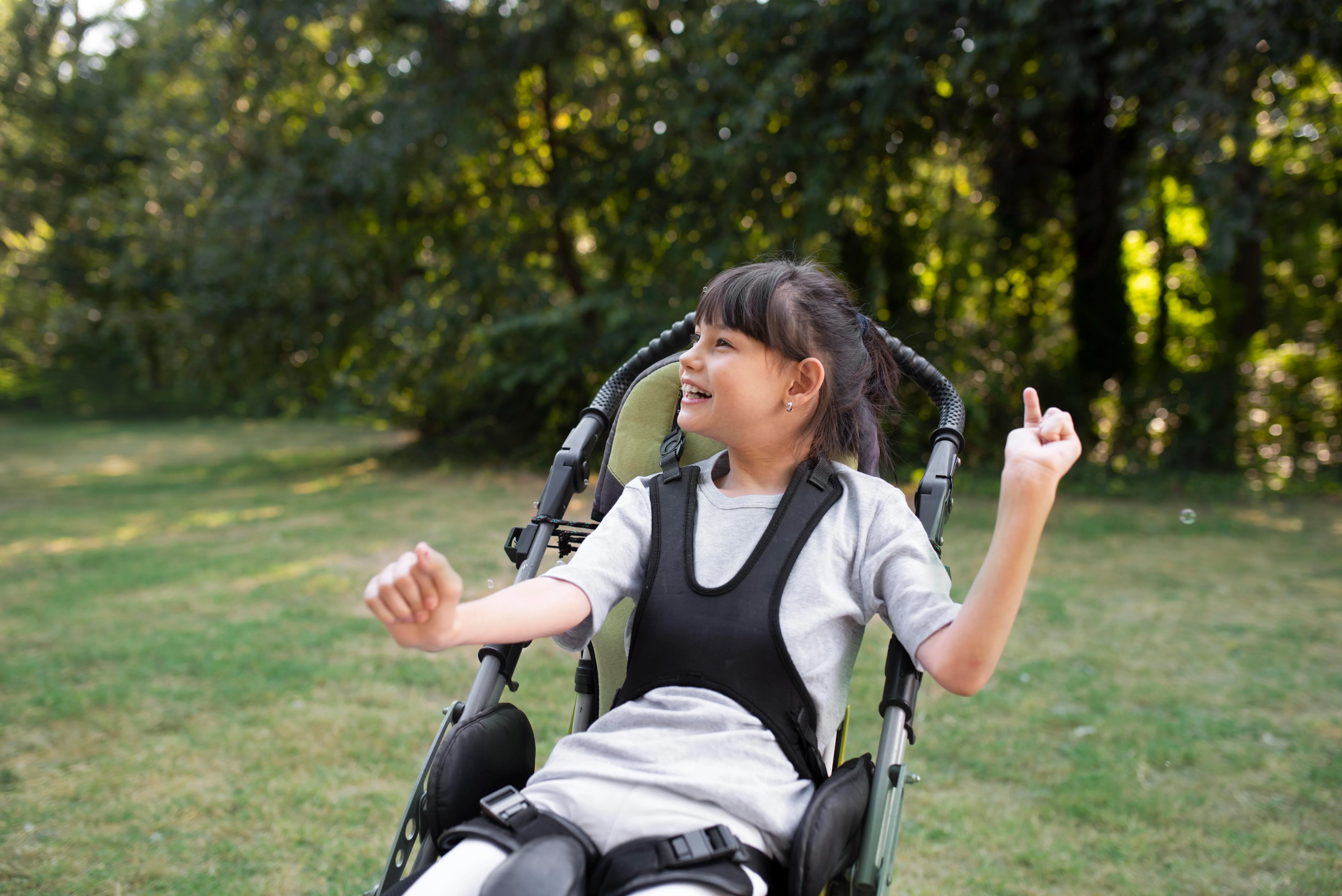
Cerebral palsy (CP) is one of the most common neuromotor disorders in children, affecting posture, movement, and coordination. Early diagnosis and evidence-based pediatric physical therapy interventions are essential to optimize function, prevent secondary complications, and improve quality of life.
Types of Cerebral Palsy
Cerebral palsy is classified based on movement pattern and muscle tone:
Spastic CP: Characterized by stiff muscles and hypertonia; most common type (about 70–80%).
Athetoid / Dyskinetic CP: Involuntary, slow, writhing movements with fluctuating muscle tone.
Ataxic CP: Poor coordination, balance difficulties, and tremors.
Mixed CP: A combination of types, typically spastic and dyskinetic features.
Management Strategies for CP
Management is multidisciplinary, combining physical therapy, occupational therapy, medical management, and assistive devices. The primary goals are:
Improving gross motor function: Sitting, standing, walking, and balance.
Enhancing fine motor skills: Grasp, reach, and hand-eye coordination.
Preventing musculoskeletal complications: Contractures, scoliosis, or hip subluxation.
Promoting independence: Daily living activities, participation, and social integration.
Evidence-Based Pediatric Physical Therapy Interventions
Several proven therapy approaches can enhance motor function in children with CP:
1. Neuro-Developmental Treatment (NDT)
A hands-on, individualized therapy that facilitates normal movement patterns, improves postural control, and reduces compensatory movements.
Evidence: NDT improves trunk control, sitting balance, and gross motor function in children with spastic and hypotonic CP (Novak et al., 2013; Chen et al., 2016).
2. Universal Exercise Unit (UEU) / Spider Cage
A 3D suspension system using harnesses, pulleys, and elastic cords to support and assist children during functional movement practice.
Evidence: Improves trunk stability, balance, and lower-limb function in spastic CP when combined with conventional therapy (Medico Publication, 2018; PMC).
3. Cuevas Medek Exercises (CME)
Hands-on psychomotor exercises that use dynamic antigravity challenges to elicit automatic motor responses.
Evidence: Effective for accelerating motor milestones and improving postural control in infants and children with delayed motor development (Physiopedia, 2020; JPTCP, 2019).
4. Dynamic Movement Intervention (DMI)
Focuses on goal-directed, task-specific movement patterns with graded challenges to promote neuroplasticity.
Evidence: Emerging technique; promising outcomes reported, but more high-quality research is needed (Children’s Hospital Review, 2021).
Why We Use These Interventions in Our Center
At The One for Physical Therapy, we integrate NDT, UEU, CME, and DMI in individualized therapy plans based on each child’s goals, abilities, and family priorities. Key benefits include:
Safe, progressive skill development with graded support.
Enhanced trunk control and gross motor function.
Improved balance, coordination, and strength.
Motivation and engagement through functional, play-based therapy.
Conclusion
Cerebral palsy management requires evidence-based, child-centered interventions. At our center, we combine proven physical therapy techniques with individualized care to maximize functional independence, participation, and quality of life for children with CP.
References
Novak, I., McIntyre, S., Morgan, C., Campbell, L., Dark, L., Morton, N., ... & Goldsmith, S. (2013). A systematic review of interventions for children with cerebral palsy: State of the evidence. Developmental Medicine & Child Neurology, 55(10), 885–910.
Chen, Y., et al. (2016). Effectiveness of neurodevelopmental treatment on postural control in children with cerebral palsy: A systematic review. Clinical Rehabilitation, 30(11), 1077–1086.
Medico Publication. (2018). Effects of Spider Cage therapy in spastic diplegic children. Journal of Pediatric Rehabilitation, 12(4), 203–211.
Physiopedia. (2020). Cuevas Medek Exercises in pediatric physical therapy. Retrieved from https://www.physio-pedia.com
Journal of Pediatric Therapy & Clinical Practice (JPTCP). (2019). Cuevas Medek Exercises: Motor milestone outcomes in infants with developmental delays.
Children’s Hospital Review. (2021). Dynamic Movement Intervention in pediatric neurorehabilitation: Critical review.