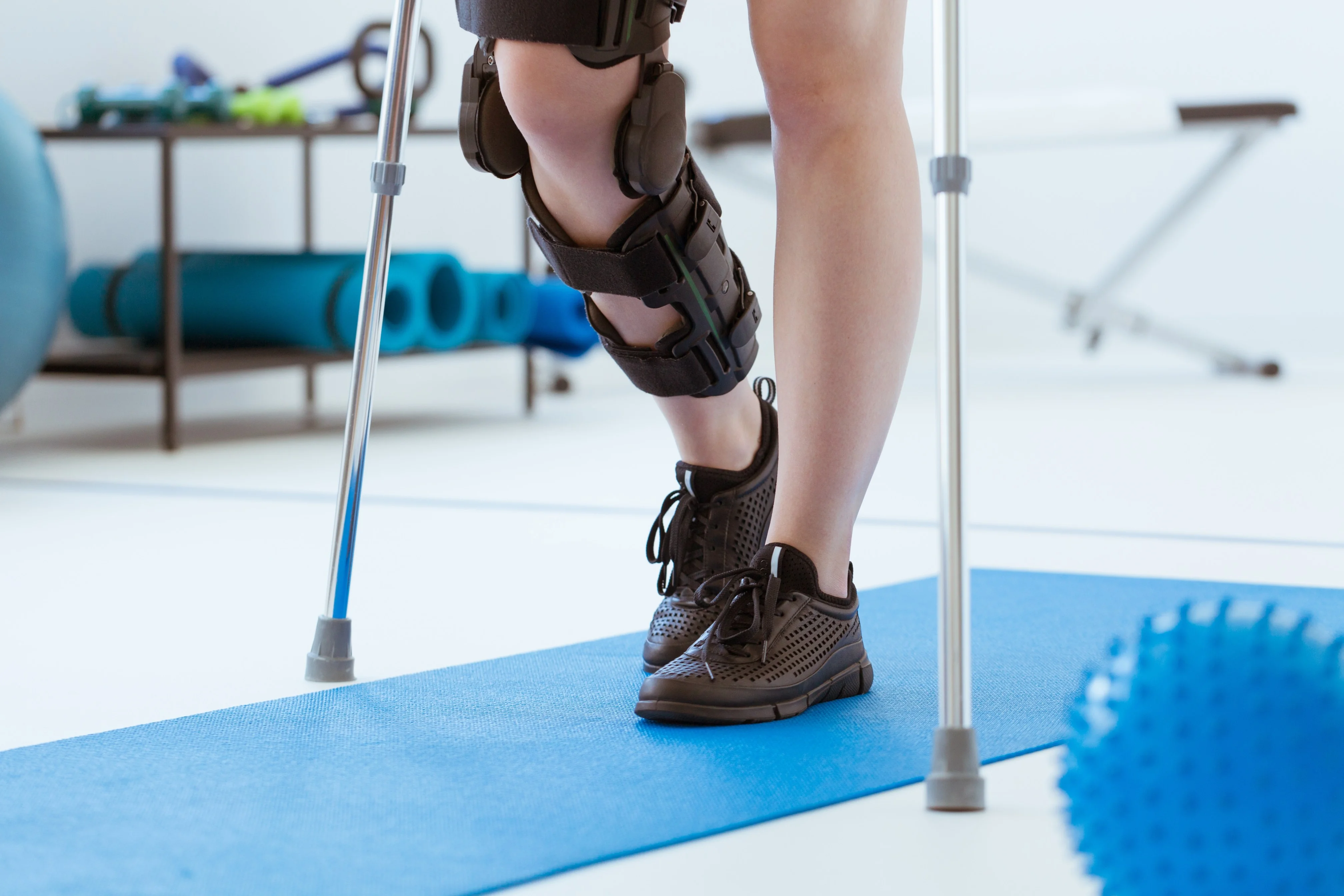
Orthoses and Prostheses in Pediatric Rehabilitation: Supporting Function and Independence
At The One for Physical Therapy, we incorporate orthoses and prostheses as key adjuncts in pediatric rehabilitation. These devices are designed to support alignment, improve mobility, prevent deformities, and enhance participation in daily activities for children with conditions such as cerebral palsy, spina bifida, muscular dystrophy, or other neuromotor developmental delays.
Types of Pediatric Orthoses
Orthoses are externally applied devices that support or correct musculoskeletal function. Common pediatric orthoses include:
Ankle-Foot Orthoses (AFOs)
Support the ankle and foot to improve gait, stability, and balance.
Often prescribed for children with spastic CP, flat foot, or toe-walking.
Knee-Ankle-Foot Orthoses (KAFOs)
Provide stability across the knee, ankle, and foot for children with significant weakness or hypertonia.
Assist in standing and walking in children with diplegic or quadriplegic CP.
Wrist-Hand Orthoses (WHO)
Support the wrist and hand for children with poor hand function, spasticity, or developmental delays.
Facilitate grip, grasp, and fine motor tasks.
Dynamic or Functional Orthoses
Flexible devices that permit movement while providing support, such as Ground Reaction AFOs (GRAFOs).
Encourage muscle activation and motor learning during functional activities.
Prostheses in Pediatric Rehabilitation
Prostheses replace missing limbs or parts of limbs, helping children to achieve independence in mobility and self-care:
Lower-limb prostheses: Support standing, walking, and running for children with congenital limb deficiencies or amputations.
Upper-limb prostheses: Enhance reaching, grasping, and manipulation for children with congenital absence or amputation.
Modern pediatric prostheses are lightweight, adjustable, and designed for growth, allowing children to participate fully in daily activities and play.
Importance in Common Pediatric Conditions
Orthoses and prostheses are particularly valuable in children with:
Cerebral Palsy (CP)
Prevents contractures, deformities, and abnormal gait patterns.
Improves standing balance, walking efficiency, and functional mobility.
Developmental Delays or Hypotonia
Supports trunk, limb, and joint alignment, facilitating postural control and movement practice.
Congenital Limb Differences or Amputations
Enables functional independence in mobility, play, and self-care.
Spina Bifida and Muscular Weakness Disorders
Provides joint stability, preventing progressive deformities and promoting safe ambulation.
Evidence Supporting Orthoses in Pediatrics
Gait and mobility improvements: Studies demonstrate that AFOs and KAFOs improve walking speed, stride length, and postural control in children with CP (Bregman et al., 2011).
Prevention of deformities: Long-term orthotic use can reduce the progression of contractures and skeletal deformities in spastic CP (Desloovere et al., 2006).
Enhanced functional participation: Orthoses allow children to engage more independently in school, play, and daily activities, enhancing quality of life (Rethlefsen et al., 2014).
How We Use Orthoses and Prostheses at Our Center
Individualized assessment: Each child is evaluated for muscle strength, tone, joint alignment, and functional goals.
Custom fitting: Devices are tailored to growth, comfort, and mobility needs.
Integrated therapy: Orthoses and prostheses are used alongside physical therapy, gait training, strengthening, and functional activities.
Ongoing monitoring: Regular assessments ensure adjustments as the child grows and progresses.
Benefits for Children
Enhances mobility, balance, and functional independence
Prevents contractures and skeletal deformities
Improves participation in daily activities, play, and school
Supports motor learning and muscle activation
Provides confidence and safety during movement
Conclusion
Orthoses and prostheses are essential tools in pediatric rehabilitation, especially for children with CP, developmental delays, or limb differences. At The One for Physical Therapy, we use these devices as part of comprehensive, evidence-based therapy programs to maximize function, independence, and quality of life for every child.
References
Bregman, D. J. J., et al. (2011). The effect of ankle-foot orthoses on walking in children with cerebral palsy: A systematic review. Gait & Posture, 33(2), 182–190.
Desloovere, K., et al. (2006). The use of orthoses in children with cerebral palsy: Long-term impact on deformities and function. Developmental Medicine & Child Neurology, 48(8), 678–684.
Rethlefsen, S. A., et al. (2014). Functional outcomes with orthoses in pediatric rehabilitation: A review. Pediatric Physical Therapy, 26(1), 1–11.