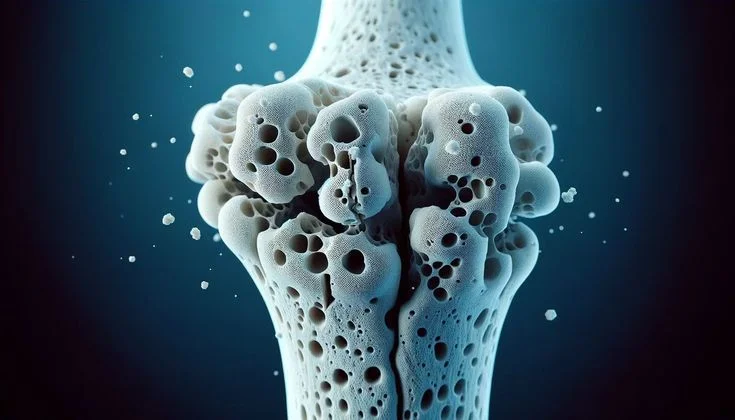
Osteoporosis: is a condition where bones lose density and strength, making them fragile and prone to fractures, even from minor injuries. Bone is a living tissue that is continuously remodeled. When bone resorption exceeds formation, bones weaken. Contrary to common belief, osteoporosis is not exclusive to older adults; children can also be affected, though the underlying process differs.
Osteoporosis: Adults vs. Children
In Adults
• Typically develops after peak bone mass in early adulthood.
• Risk factors include:
o Aging and hormonal changes (e.g., post-menopause)
o Low calcium and vitamin D intake
o Physical inactivity
o Long-term corticosteroid use
• Common fracture sites: hip, spine, and wrist, affecting independence and daily function.
In Children
• The core issue is failure to build adequate bone, resulting in low bone density for age (pediatric osteoporosis).
• Common causes:
o Genetic conditions (e.g., Osteogenesis Imperfecta)
o Chronic illnesses (Crohn's disease, juvenile idiopathic arthritis)
o Limited mobility or physical inactivity
o Long-term corticosteroid therapy
o Poor nutrition (low calcium and vitamin D)
Causes of Pediatric Osteoporosis:
Primary (Genetic/Idiopathic) Causes
• Osteogenesis Imperfecta (OI): Defective collagen production, most common genetic cause.
• Idiopathic Juvenile Osteoporosis (IJO): Rare, self-limiting, often prepubertal.
• Other genetic syndromes: Osteoporosis Pseudoglioma Syndrome, Homocystinuria, Ehlers-Danlos syndrome.
Secondary (Acquired) Causes:
• Glucocorticoid therapy: Suppresses bone formation, increases resorption.
• Neurological disorders: Cerebral palsy, epilepsy, Duchenne muscular dystrophy (impair bone loading).
• Chronic inflammatory diseases: Juvenile idiopathic arthritis, inflammatory bowel disease.
• Nutritional/metabolic factors: Vitamin D deficiency, low calcium, malabsorption, hyperthyroidism.
• Reduced mobility: Lack of mechanical loading impairs bone development.
Signs and Symptoms:
• Low-trauma fractures (minor injuries)
• Recurrent fractures of long bones or spine
• Back pain, loss of height, or spinal curvature
• Bone pain
• Vertebral fractures may be asymptomatic and found incidentally
Diagnosis:
DXA Scan
• Gold-standard tool for bone mineral density (BMD) measurement.
• Z-score ≤ -2.0 indicates low bone density for age.
X-Ray Imaging
• Lateral spine radiographs detect vertebral fractures and deformities, even without pain.
Fracture History
Diagnosis requires low BMD plus significant fracture history:
• ≥1 vertebral compression fracture
• ≥2 long bone fractures before age 10
• ≥3 long bone fractures before age 19
Treatment and Management:
1. Address the Underlying Cause
• Treat chronic illness or adjust medications if osteoporosis is secondary.
2. Nutrition
• Adequate calcium (dairy, leafy greens, fortified foods)
• Vitamin D supplementation
• Balanced diet with sufficient protein and minerals
3. Physical Activity
• Weight-bearing and resistance exercises stimulate bone formation
• Tailor activities to child's ability and fracture risk
4. Bone-Active Medications
• Bisphosphonates in severe cases
• Individualized based on fracture burden and underlying diagnosis
5. Monitoring and Follow-Up
• Regular BMD monitoring and fracture assessment as the child grows
Role of Physiotherapy:
• Individualized exercise programs based on age, BMD, and functional level
• Weight-bearing and resistance training to stimulate bone formation
• Improves balance and strength to reduce fall risk
• Promotes posture correction, pain reduction, and enhanced mobility
• Educates families on safe movement and fall prevention
Prevention: What Parents Can Do
• Encourage calcium-rich foods early
• Ensure adequate vitamin D through diet and sun exposure
• Promote regular weight-bearing physical activity
• Maintain healthy body weight, limit soft drinks
• Monitor children with chronic illness or long-term steroid use
When to Seek Medical Advice
• Repeated or low-impact fractures
• Persistent bone pain or unexplained growth delays
• Risk factors: chronic illness, long-term steroid use, family history
• Signs of calcium or vitamin D deficiency
References:
Bachrach, L. K. (2014). Osteoporosis and measurement of bone mass in children and adolescents. Endocrinology and Metabolism Clinics of North America, 43(3), 679–700. https://doi.org/10.1016/j.ecl.2014.05.004
Ciancia, S., van Rijn, R. R., Högler, W., et al. (2022). Osteoporosis in children and adolescents: When to suspect and how to diagnose it. European Journal of Pediatrics, 181(7), 2549–2561. https://doi.org/10.1007/s00431-022-04455-2
Fewtrell, M. (2011). Does early nutrition program later bone health in children? The American Journal of Clinical Nutrition, 94(6), 1880S–1887S. https://doi.org/10.3945/ajcn.110.001933
Golden, N. H., & Abrams, S. A. (2014). Optimizing bone health in children and adolescents. Pediatrics, 134(4), e1229–e1243. https://doi.org/10.1542/peds.2014-2173
The Royal Osteoporosis Society. (n.d.). Osteoporosis in children. Retrieved from https://theros.org.uk/information-and-support/osteoporosis/osteoporosis-in-children/
MSD Manuals – Professional. (n.d.). Osteoporosis in children. Retrieved from https://www.msdmanuals.com/professional/pediatrics/bone-disorders-in-children/osteoporosis-in-children
Vosiel, U., et al. (2009). Osteoporosis in children: Pediatric and pediatric rheumatology perspective: A review. Pediatric Rheumatology Online Journal.
Ward, K. A., & Roberts, S. A. (2016). Physical activity and bone health in children and adolescents. Pediatric Endocrinology Reviews, 13(2), 1–9.
Weaver, C. M., Gordon, C. M., et al. (2016). The National Osteoporosis Foundation's position statement on peak bone mass development. Osteoporosis International, 27(4), 1281–1386. https://doi.org/10.1007/s00198-015-3440-3